Sign in. It’s quick, free and it’s up to you.
An account is an optional way to support the work we do. Find out more.
Sign in. It’s quick, free and it’s up to you.
An account is an optional way to support the work we do. Find out more.
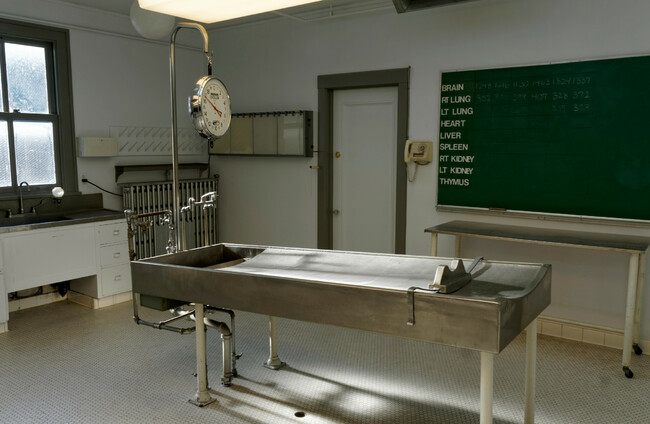
IRELAND’S AUTOPSY SYSTEM is in “jeopardy” and families could face delays holding funerals if staff shortages and pressures are not addressed, a new paper warns.
The paper, published this week by the Royal College of Physicians of Ireland (RCPI), says that many hospitals across the country are no longer carrying out autopsies.
It says that there is a “very real crisis” in the provision of autopsies by the HSE and that the lack of a high quality and sustainable service to carry them out will seriously impact bereaved families.
Around 6,000 autopsies are carried out in Ireland every year in cases involving sudden, unexplained, or unnatural deaths like suicides, drug overdoses or road traffic collisions.
They serve to establish a person’s exact cause of death and give families information to help them get closure when a loved one dies in sudden or unexplained circumstances.
However, three of Dublin’s main hospitals – the Mater Hospital, St James’s Hospital and Beaumont Hospital – and Waterford University Hospital have all stopped carrying them out.
Autopsies on Mater Hospital patients are now being performed in the Dublin District Mortuary in Glasnevin.
The RCPI paper warns that if another large hospital withdraws its autopsy services, it is “highly likely” that the HSE will face a crisis with “very significant reputational impact”.
The vast majority, 94%, of coroner-directed autopsies in Ireland are carried out by hospital consultants or trainee doctors in hospital mortuaries that are ultimately resourced, managed and staffed by the HSE.
However, the paper warns that many of these doctors, who work in the field of histopathology, have stopped doing post-mortem exams because of work pressure demands, time constraints and difficulties encountered when presenting evidence in coroners courts.
It further says that Ireland already has a shortage of trained histopathologists who want to carry out autopsies, and that the situation will therefore “become much worse if the current circumstances prevail”.
“If hospitals are permitted to stop providing an autopsy service without ensuring that the workload is accommodated within the region, the capacity to provide this valuable end of care medical examination will no longer be readily available,” the paper says.
“This will also inevitably lead to delays in burials/cremations and will only compound the distress for bereaved families.”
The paper has called for urgent government action to avoid a future situation where bereaved families can’t access autopsy services and are subjected to unnecessary suffering.
A detailed review of current autopsy capacity is urgently required to inform workforce planning to develop a resilient service for families.
It suggests that a detailed costing exercise be carried out to ensure that hospitals are reimbursed for the full cost of providing autopsy services.
It also recommends that hospitals make autopsy work more manageable within the normal work environment and commitments of pathologists, and notes that the provision of services at current levels would require 24 whole time equivalent pathologists.

To embed this post, copy the code below on your site












have your say